
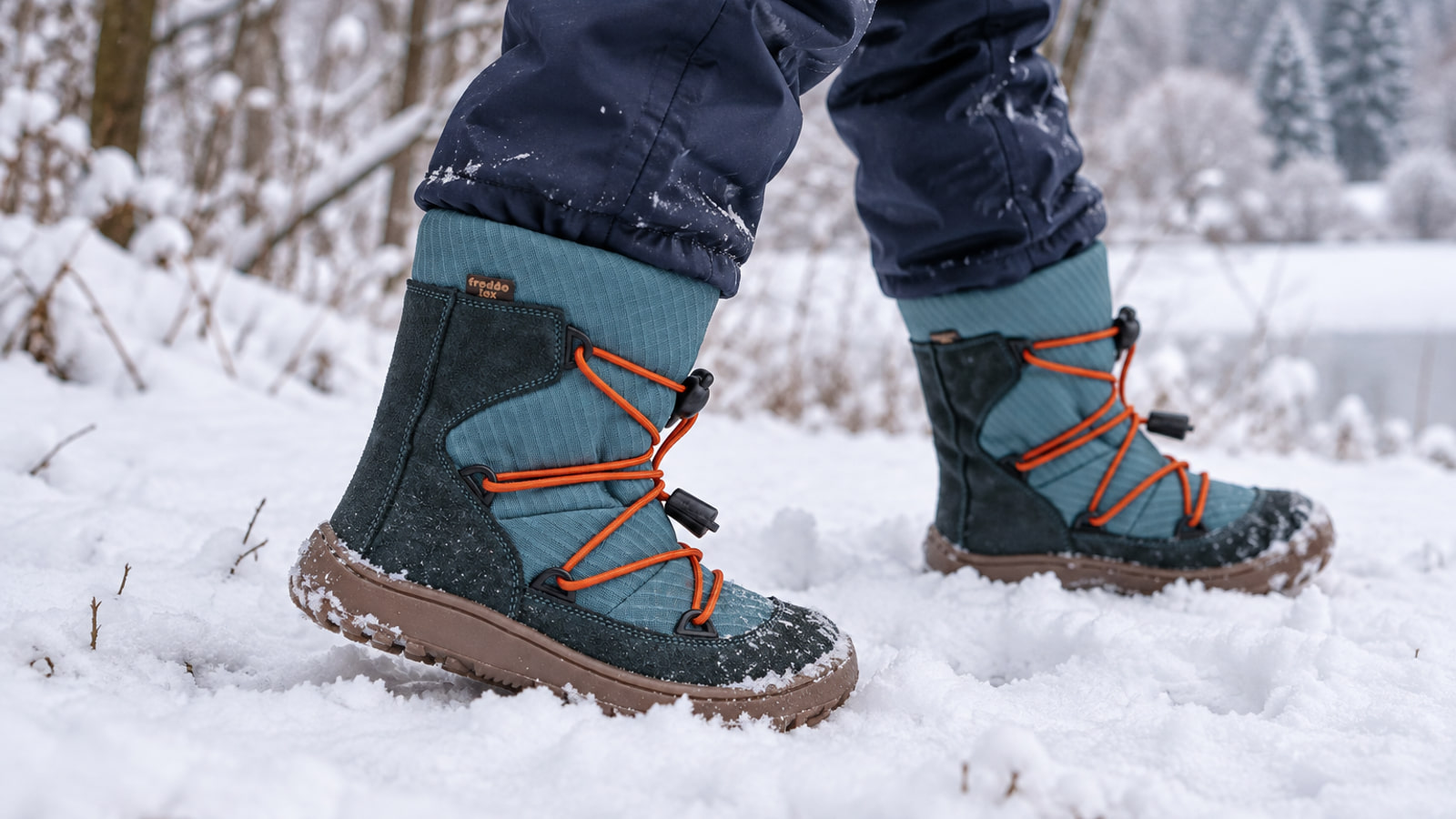
Froddo offers several kinds of winter barefoot footwear, so the model name alone rarely tells you which pair will fit best. Start with three practical questions: what shape is the foot, how much warmth is needed and does the shoe leave enough usable space?
In our Froddo winter range, the two main barefoot fits are Barefoot and Barefoot UP. Both are foot-shaped and flexible, but the volume inside the shoe is different. Once that distinction is clear, choosing the right lining becomes much easier.
Froddo Barefoot or Barefoot UP?
Froddo Barefoot: the regular-volume fit
The classic Froddo Barefoot fit is usually the better starting point for:
- average-width feet,
- a regular-height instep,
- average to narrower ankles.
These winter styles can wrap neatly around a slimmer ankle, while a lightly structured heel helps the boot keep its shape. The front still gives the toes the space expected from barefoot footwear.
Froddo Barefoot UP: more volume over the foot
Barefoot UP is designed for feet that need more internal volume. It is particularly useful for:
- a higher instep,
- a fuller or more voluminous foot,
- feet that need a little more room through the midfoot and heel.
UP styles can still be adjusted securely around the ankle. On hook-and-loop models, the straps are generally longer than on the classic Barefoot fit, giving more adjustment over the instep.
The key difference: Barefoot versus Barefoot UP is not simply “narrow” versus “wide”. Barefoot UP has more overall volume, especially over the foot and through the middle and rear sections.
What About the Outsole?
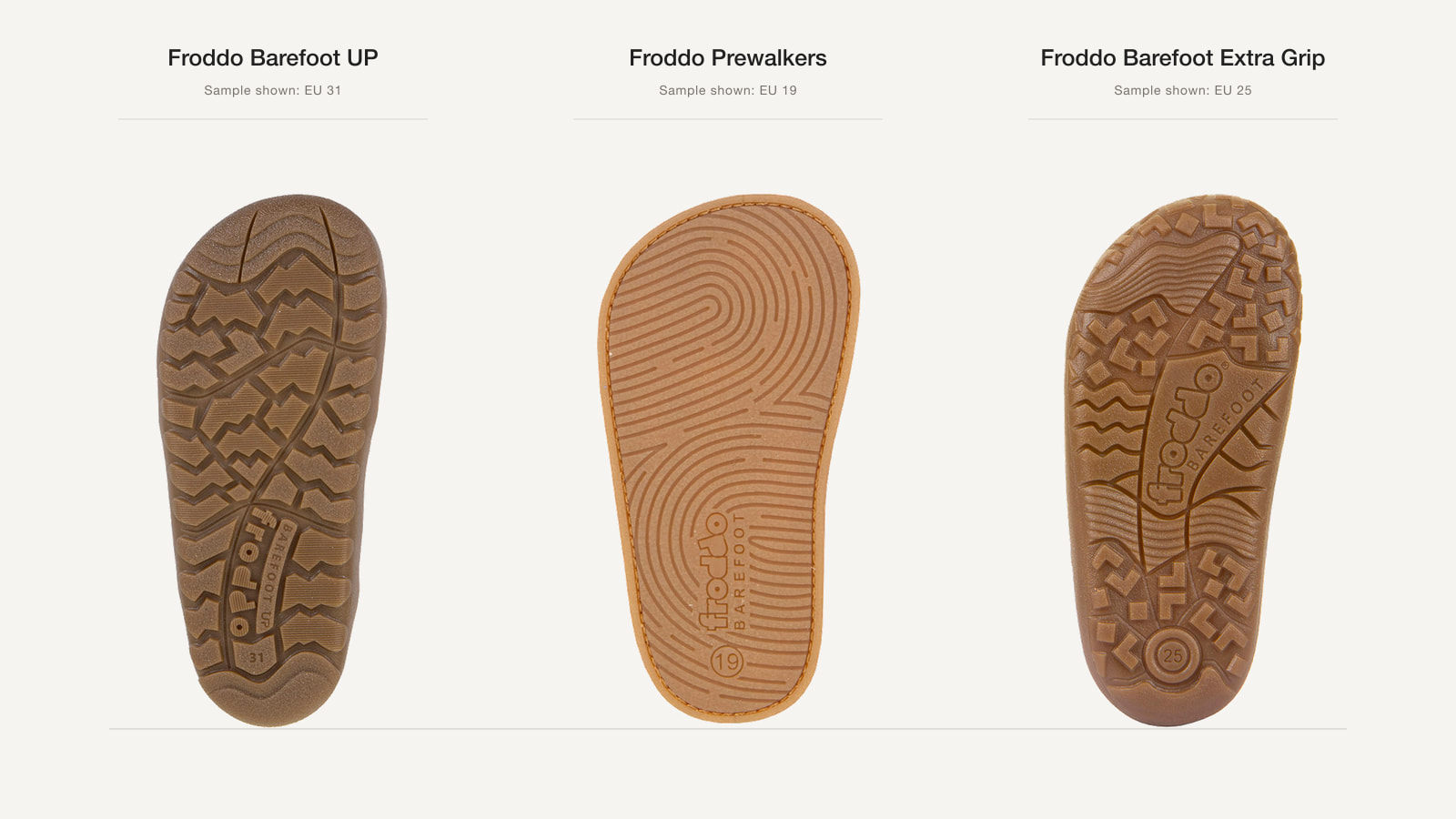
Both the classic Barefoot range and Barefoot UP winter styles use Extra Grip outsoles made from Lifolit®. Their tread patterns and overall shapes are slightly different: Barefoot UP has a fuller outline, with more room through the midfoot and heel.
Both remain barefoot in concept, with a wide toe area and a flexible construction. Fit should therefore be judged across the whole foot—not only by comparing the widest point of two soles.
Which Type of Insulation Should You Choose?
Froddo winter shoes appear with several lining options. The thickest one is not automatically the best one. Think about the local climate, how long the wearer stays outdoors and whether they are usually walking, playing or standing still.
Textile or microfibre lining
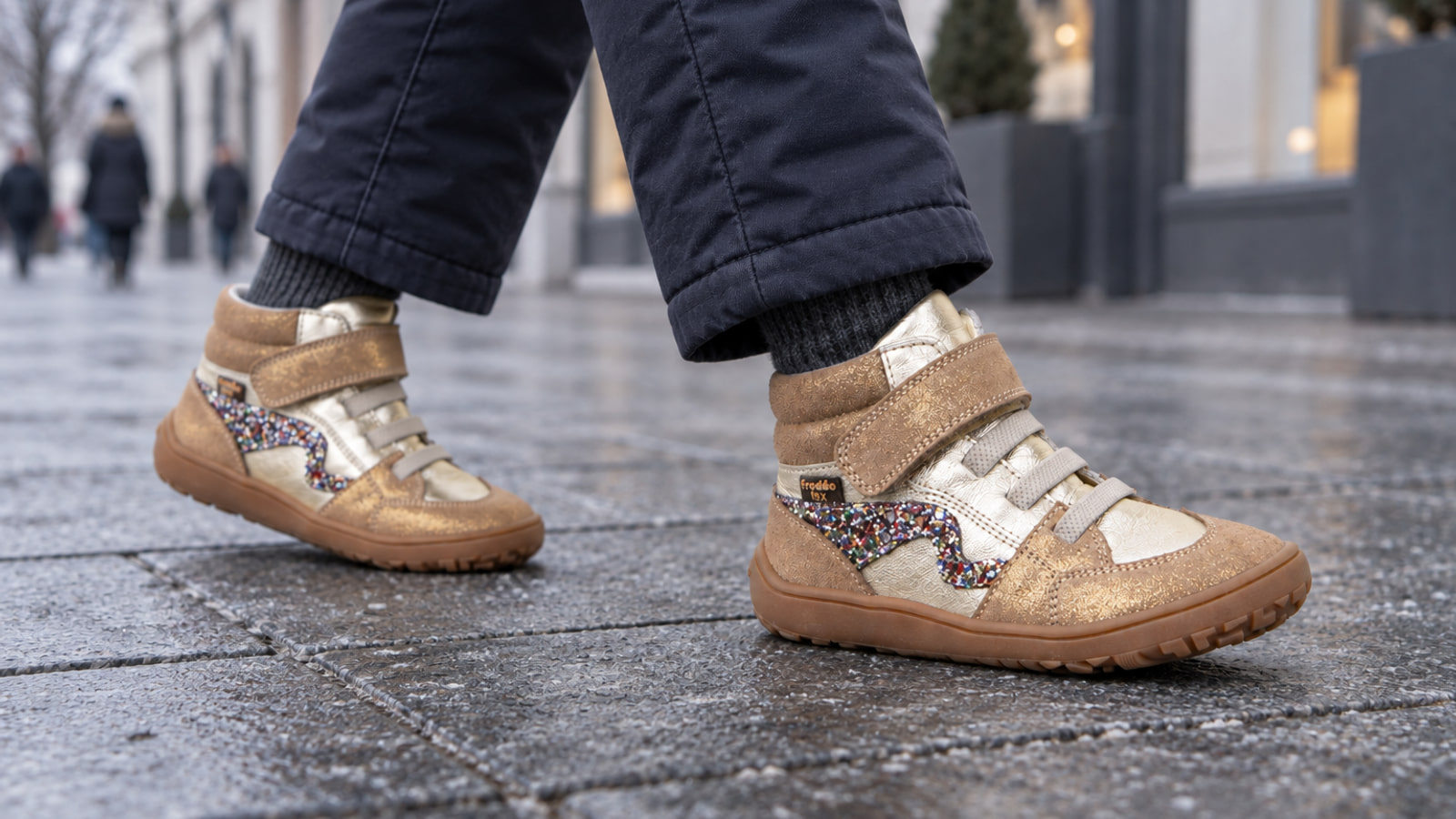
This is the lightest winter option and often works well for:
- mild winters and city wear,
- the transition between autumn and winter,
- active children who generate plenty of warmth while moving.
These models usually have a removable insole. When the weather becomes colder, the original insole can be replaced with an OmaKing insulated insole. A suitable functional sock can add another adaptable layer without committing to the warmest lining for the whole season.
Always recheck the fit after changing the insole. An insulated insole takes up space and should not make the toes, width or instep feel compressed.
100% sheep wool
Sheep wool is a warmer option with natural thermoregulating properties. It helps maintain a comfortable microclimate and manages the moisture produced during wear.
Froddo uses relatively fine wool. Its pile is lower and more compact than lambskin fur, so it feels less plush but still provides substantial winter insulation. From our experience fitting these shoes over many seasons, only rarely do children find the wool unpleasant or “itchy”.
Wool-lined models are a sensible choice for genuinely cold winter conditions. In a very mild climate or for highly active wearers, they may simply feel warmer than necessary.
Lambskin fur
Lambskin has a higher pile and feels especially soft and plush around the foot. We would not describe it as automatically warmer or less warm than 100% sheep wool; the more useful distinction is how it feels.
It can be a comfortable alternative for children or adults who are sensitive to the texture of a classic wool lining. Lambskin also appears in selected Froddo Prewalkers for very young children and first walkers.
Construction note: Wool- and lambskin-lined Froddo styles generally have insulation integrated throughout the interior, including under the foot, and the insole is not usually removable. Textile- or microfibre-lined styles generally use a removable insole.
Prewalkers Need a More Controlled Fit
A child who is only beginning to walk should have room for the toes, but not so much extra length that the shoe becomes difficult to control. For Froddo Prewalkers, we generally recommend approximately 0.5–0.8 cm of extra room.
The ankle and heel should feel secure, the front should follow the child’s toe shape and the sole should flex without the shoe slipping around the foot.
Membrane or Leather Without a Membrane?
Most Froddo winter models include a membrane, but leather winter styles without a membrane also appear in the collection. A membrane can be useful in wet, changeable conditions. Properly cared-for leather can also handle normal winter dampness well, provided it is treated regularly with a product suitable for that particular leather.
Neither option turns a winter barefoot shoe into a rubber boot. Prolonged standing in water, deep wet snow or complete saturation can eventually allow moisture inside.
Do Not Choose Winter Size by Length Alone
Measure the foot while wearing the socks that will actually be used in the shoes. This automatically accounts for the space taken up by a thicker winter sock.
Then check the complete fit: toes must be able to move, the foot must not be compressed at the sides or over the instep, and the ankle and heel should remain secure enough to prevent unnecessary sliding. Lining may feel close and soft, but the shoe should not create pressure.
Which Froddo Winter Shoe Is the Best Match?
Regular instep and average-width foot
Begin with the classic Froddo Barefoot fit.
Higher instep or fuller-volume foot
Froddo Barefoot UP is likely to offer the more suitable internal volume.
Mild or changeable city winter
A textile or microfibre lining gives flexibility, with the option to use an insulated insole on colder days.
Colder winter conditions
Choose 100% sheep wool or lambskin according to the preferred feel, then make sure the insulation still leaves enough room for natural movement.
In short: choose the fit first, the insulation second and the size with the intended winter socks. A well-fitted winter shoe is warm not only because of its lining, but because the foot has enough room to move naturally.