
How to Choose Autumn Barefoot Shoes for Kids
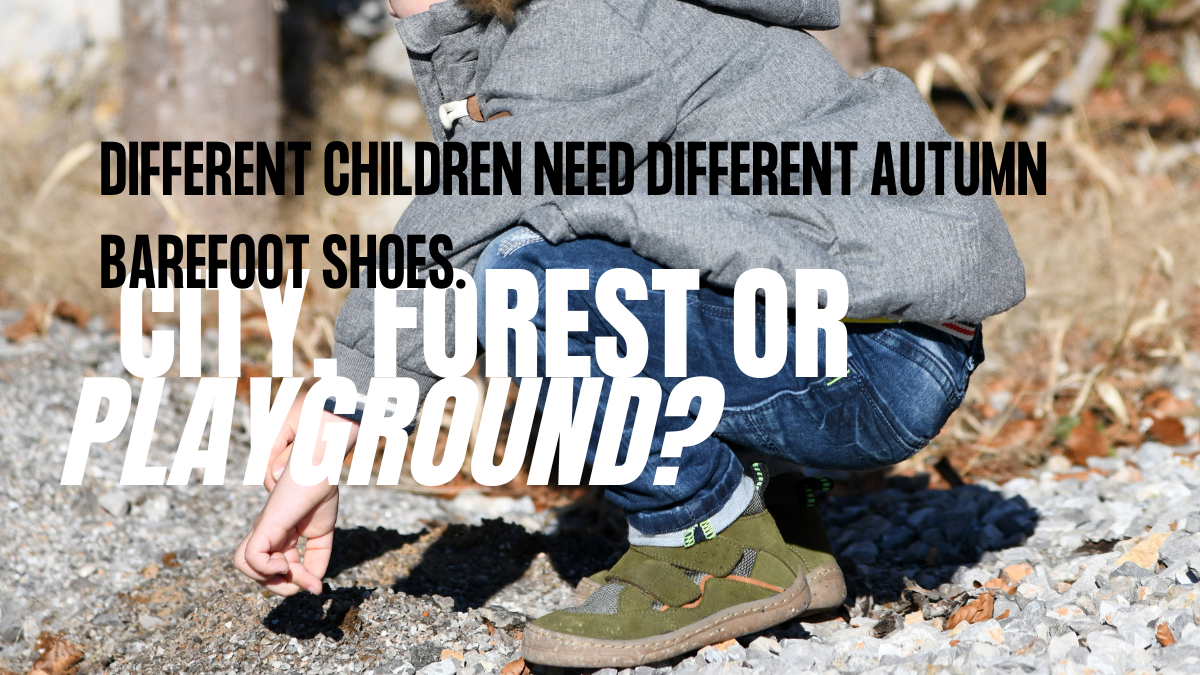
City, forest or playground? Different children need different autumn barefoot shoes. The right choice depends not only on temperature, but also on where your child lives, how they spend their day and what kind of conditions their shoes will actually face.
Every autumn, parents start asking the same question: what shoes will my child need for the coming months?
The answer may be less universal than expected.
Autumn in southern Italy is very different from autumn in Finland. A child going to an urban school will also need something different from a child spending most of the day outdoors or in a forest school.
That is why, when choosing autumn barefoot shoes, we do not try to find “the best model”. Instead, we try to understand what conditions the shoes will realistically be used in.
Start with the Question: How Does Your Child Spend a Normal Day?
When choosing autumn shoes, it is often more important to think about where and how your child will wear them than to focus on a specific brand or technology.
A child who:
- gets to school by car,
- spends most of the day indoors,
- mostly walks on pavements, playgrounds and city surfaces,
will have very different needs from a child who:
- attends a forest kindergarten or forest school,
- spends the whole morning outdoors,
- regularly walks through wet grass, mud or forest trails.
When Are All-Year Barefoot Shoes Still Enough?
During early autumn, many children are still perfectly comfortable in good-quality all-year barefoot shoes.
The moment when warmer footwear becomes necessary depends on:
- local climate conditions,
- your child’s activity level,
- their individual sensitivity to cold.
If you are unsure, it often helps to compare the situation with your own feeling of comfort.
If you are still wearing sneakers or all-year shoes and do not feel the need for warmer footwear, there is a good chance your child does not need heavily insulated shoes yet either.
Of course, every child is different. Some children feel cold more easily, while others warm up very quickly through movement.
When Sneakers Are No Longer Enough, It Does Not Immediately Mean Winter Shoes
Many parents see autumn footwear as a jump from sneakers straight to insulated shoes.
In practice, there is often a very useful step in between: high-top barefoot shoes without insulation.
Simply covering the ankle can noticeably improve thermal comfort during colder days.
For many children, uninsulated high-top barefoot shoes are an ideal solution for a large part of autumn.
Does Your Child Need Shoes with a Membrane?
This is one of the most common questions parents ask.
And the answer may not be as straightforward as expected.
From our experience, high-quality leather barefoot shoes, when treated regularly, can handle normal autumn conditions very similarly to many membrane models.
That is why we do not see a membrane as an automatic necessity for every autumn shoe.
We would start considering a membrane especially in textile autumn or winter shoes, where it plays an important role in protection against moisture.
It can also be a practical solution for children who spend a lot of time in wet grass or regularly move in more demanding damp conditions.
More important than the membrane itself are well-chosen shoes, quality materials and regular care.
What Matters Most When Choosing Autumn Barefoot Shoes?
When choosing autumn barefoot shoes for children, we recommend paying attention mainly to:
- the correct size,
- enough space for the toes,
- suitable width,
- instep height,
- how the shoes will be used,
- material and construction quality.
Well-fitting shoes are often more important for your child’s comfort than a specific technology or marketing label.
If you are unsure about the size, we recommend measuring the foot properly first and following the measurements of the specific model.
Conclusion
There is no universal solution when choosing autumn barefoot shoes for children.
A child in an urban environment will have different needs from a child attending a forest school. Conditions in southern Europe are different from conditions in northern countries.
Instead of looking for “the best autumn shoes”, try to think about where your child will wear them most often, how much time they spend outdoors and what conditions they will actually face.
The answers to these questions will often help you choose the right shoes better than any universal guide.
You may also like
How to Correctly Measure Your Foot and Choose the Right Barefoot Shoe Size
Learn how to measure feet correctly and choose the right size.
Read article →First Barefoot Shoes for Kids
Everything parents should know when choosing their child's first barefoot shoes.
Read article →How to Start with Barefoot Shoes Without Stress
A simple guide for beginners switching to barefoot shoes gradually and comfortably.
Read article →