
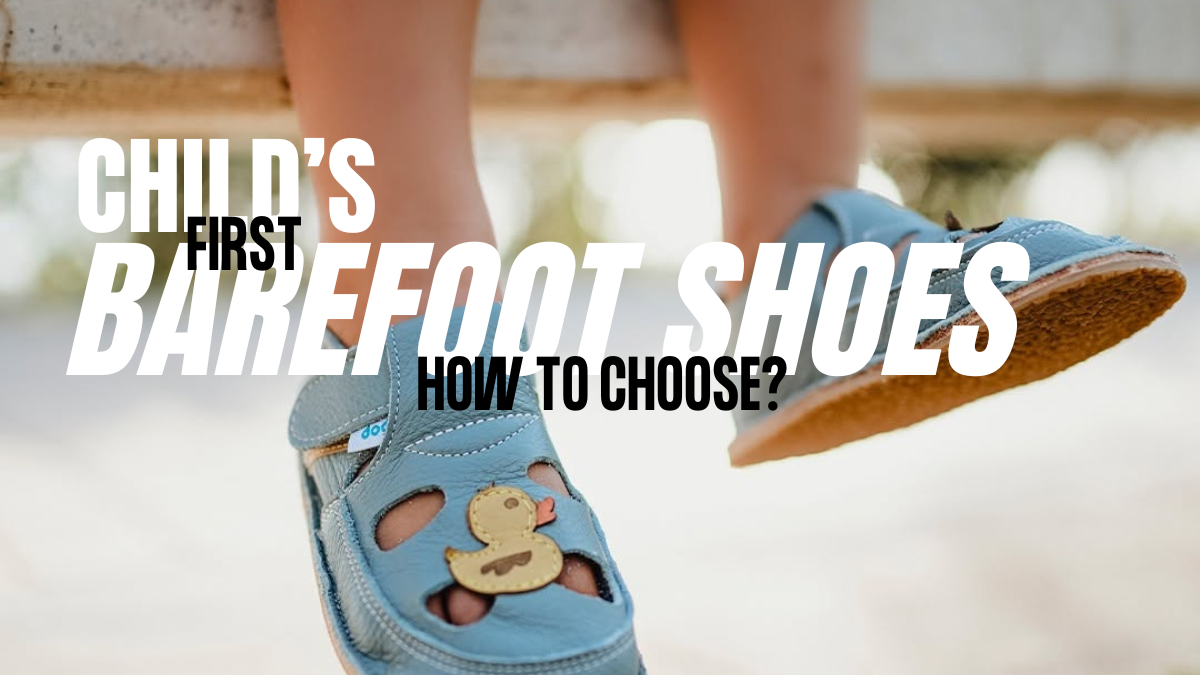
Buying your child’s first pair of shoes is a big milestone — not just for them, but for us as parents too.
Choosing the right first barefoot shoes for kids can support healthy foot development, natural walking, and proper posture. In this guide, we’ll explain how to choose the first shoes for your child so they are not only comfortable but truly suitable for their growing feet.
When Is the Right Time for First Shoes?
Before buying, ask yourself: does my child really need shoes yet?
If your child is only starting to stand or cruising around furniture, they do not yet need first walker shoes.
At this stage, it’s best to let them go barefoot or wear non-slip socks.
If it's colder outside, warm booties for the stroller or carrier will be enough.
What to Consider When Choosing First Barefoot Shoes?
Once your child starts walking independently, it’s time to look for their first barefoot shoes.
From a barefoot perspective, we recommend choosing the softest and most flexible shoes possible, to allow the foot to move naturally and develop properly.
However, flexibility alone is not enough — you also need to consider:
- the width of the foot (narrow, regular, wide),
- the type of instep (low, medium, high),
- the overall foot shape,
- good fit around the ankle.
Before purchasing, we highly recommend properly measuring your child’s foot.
How Much Extra Space Should You Leave?
After measuring the foot’s length and width, it’s important to add an appropriate allowance (extra space).
For first walkers, we recommend a maximum toe allowance of 0.5–0.8 cm.
A too-large allowance can cause:
- tripping,
- toeing in or out while walking,
- or changing the walking technique unnaturally.
Since barefoot shoes aim to promote natural movement, we do not recommend large allowances for small children.
As your child becomes a more experienced walker, you can gradually increase the allowance up to about 1.2 cm.
What Type of Shoes Are Best for First Walkers?
For your child's first shoes, we recommend soft-soled shoes — made from leather or with thin rubber soles (not rigid molded soles).
These types offer maximum flexibility and a natural walking feel.
Keep in mind that many soft-soled models are not suitable for wet conditions.
If your child starts walking during autumn or winter, when moisture is unavoidable, choose barefoot shoes with a molded (cup) sole, but without ankle or heel support.
How We Can Help You Choose the Right Barefoot Shoes
If you are still unsure how to choose the first barefoot shoes, don’t hesitate to contact us by email — we’ll be happy to help you.
If you're near Bratislava, feel free to visit our store, where our experienced team will gladly assist you.
PS: Let Them Go Barefoot as Much as Possible
Whenever conditions allow, let your child walk barefoot as much as possible — even outdoors.
Nothing can truly replace the natural connection between the foot and the ground.
Choosing the right shoes is an important first step. Explore our carefully selected range of barefoot shoes for kids designed for healthy first steps.
You may also like
How to Correctly Measure Your Foot and Choose the Right Barefoot Shoe Size
Learn how to measure feet accurately and choose the correct shoe size.
Read article →Why Barefoot?
Understand the philosophy behind barefoot footwear and natural movement.
Read article →The Benefits of Barefoot Shoes for Foot Health
Discover how barefoot shoes can support natural movement and healthy feet.
Read article →