
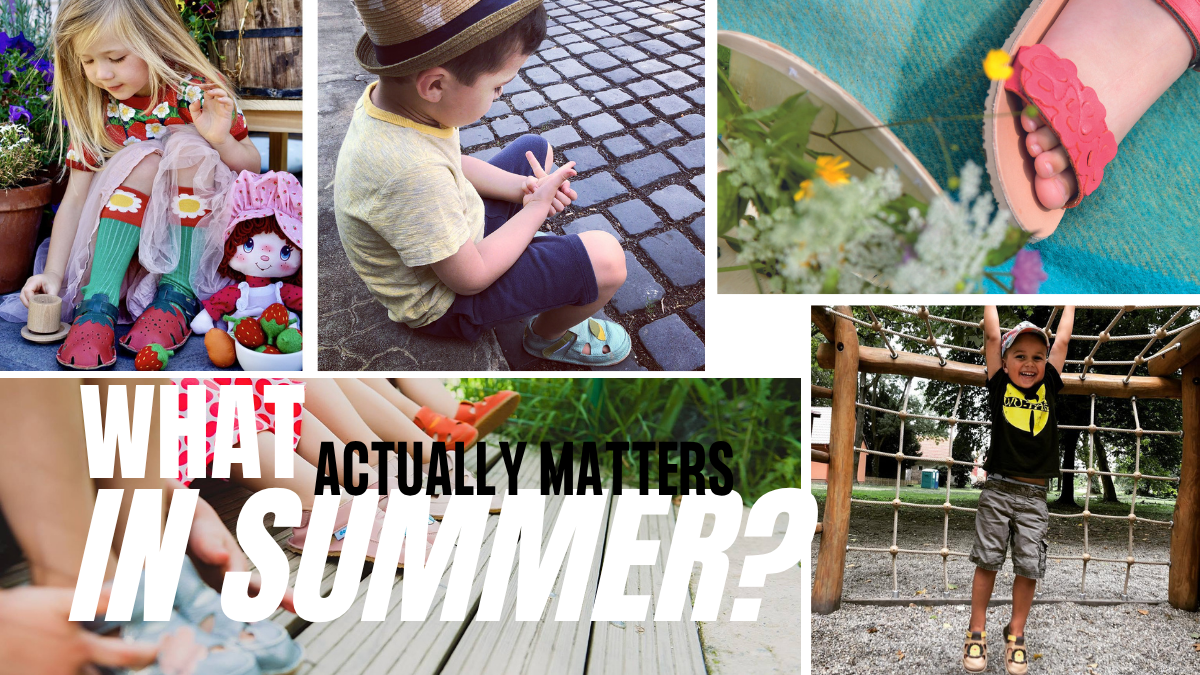
How to Choose Kids’ Barefoot Sandals for Summer
Summer footwear for children sounds simple — until you start looking for the right sandals. Some models look sturdy and supportive, others lightweight and flexible. So what is actually worth paying attention to?
Some sandals work well for playgrounds and everyday city wear, while others are better left for short walks near the pool. And when it comes to barefoot sandals, many parents are choosing them for the very first time.
At bebarefoot.eu, we usually look at children’s summer footwear from a practical point of view first. Not only how sandals look, but how they actually work during real everyday movement.
Fully open sandals are generally better suited for summer in the city, playgrounds, holidays and normal daily wear than for demanding outdoor terrain.
1. Thin and Flexible Soles Matter More in Summer Than Many Parents Realise
Summer naturally gives children’s feet much more freedom:
- different surfaces,
- more outdoor movement,
- more barefoot time,
- more sensory stimulation.
That is exactly why sole flexibility becomes even more important during warmer months. Children naturally react to the ground they walk on. A thinner and more flexible sole allows the feet to feel surfaces better, engage muscles more naturally and move more freely with every step.
Many traditional children’s sandals may look durable and “supportive”, but in reality they are often:
- too stiff,
- unnecessarily heavy,
- difficult to bend,
- and restrictive for natural movement.
When choosing barefoot sandals, we usually recommend focusing on:
- flexibility,
- lightweight construction,
- zero drop soles,
- enough toe space.
2. Flip-Flops Are Not the Same as Sandals
Flip-flops may seem practical during summer, but they work very differently from properly secured sandals. Because there is no heel fixation, children instinctively grip them with their toes while walking to keep them on their feet.
Over time, this may lead to:
- toe gripping,
- less natural walking patterns,
- tripping,
- lower stability,
- tired feet more quickly.
For short moments near water, flip-flops are completely fine. But for active all-day movement, playgrounds or longer walks, properly fitted sandals tend to work much better.
heel fixation, adjustable fastening over the instep and a secure fit without unnecessary pressure.
3. Extra Space Works Differently in Sandals
One detail many parents are unsure about is sizing. With sneakers, larger extra space is often fine. Sandals work a little differently.
Open Sandals
For fully open sandals, a smaller extra allowance usually works better — around 0.5 cm.
If sandals are too long:
- children trip more often,
- feet slide inside the sandals,
- movement feels less stable.
Closed-Toe Sandals
Closed-toe sandals can usually handle slightly more extra space, similarly to sneakers — around 1 cm. These models also protect the toes better during more active movement.
4. Why We Usually Prefer Protected Toes for Small Children
Many parents ask why we rarely recommend fully open sandals for toddlers and very small children. The reason is simple: everyday movement.
Small children:
- trip frequently,
- climb,
- run on uneven surfaces,
- move unpredictably most of the time.
Closed or partially protected toes simply work better in real life and help avoid many small everyday injuries. That is why more protected summer sandals often make more sense for younger children than completely open styles.
5. “But Sand Gets Inside Sandals…”
Yes. It does. But honestly? Sand and small stones also get inside sneakers — just usually a little less visibly. With sandals, this is simply part of wearing more open footwear. After a playground session, they often need to be emptied out. The same happens with many summer sneakers too.
On the other hand, sandals also bring important advantages during hot weather:
- much better breathability,
- less overheating,
- faster drying,
- lighter feel overall.
For many children, summer footwear is simply about balancing:
- comfort,
- protection,
- breathability,
- and freedom of movement.
What We Usually Look for in Good Kids’ Barefoot Sandals
When choosing summer barefoot sandals, we generally focus on:
- thin and flexible soles,
- proper heel fixation,
- enough toe space,
- reasonable extra allowance,
- lightweight construction,
- comfortable adjustment over the instep.
Because in summer especially, children’s feet usually benefit most from lightness, flexibility and movement that feels as natural as possible.
And for more active summer days? Lightweight textile barefoot sneakers are often a surprisingly practical alternative too.
You may also like
First Barefoot Shoes for Kids
Everything parents should know when choosing their child's first barefoot shoes.
Read article →How to Correctly Measure Your Foot and Choose the Right Barefoot Shoe Size
Learn how to measure feet correctly and choose the right size.
Read article →How to Start with Barefoot Shoes Without Stress
A simple guide for beginners switching to barefoot shoes gradually and comfortably.
Read article →