
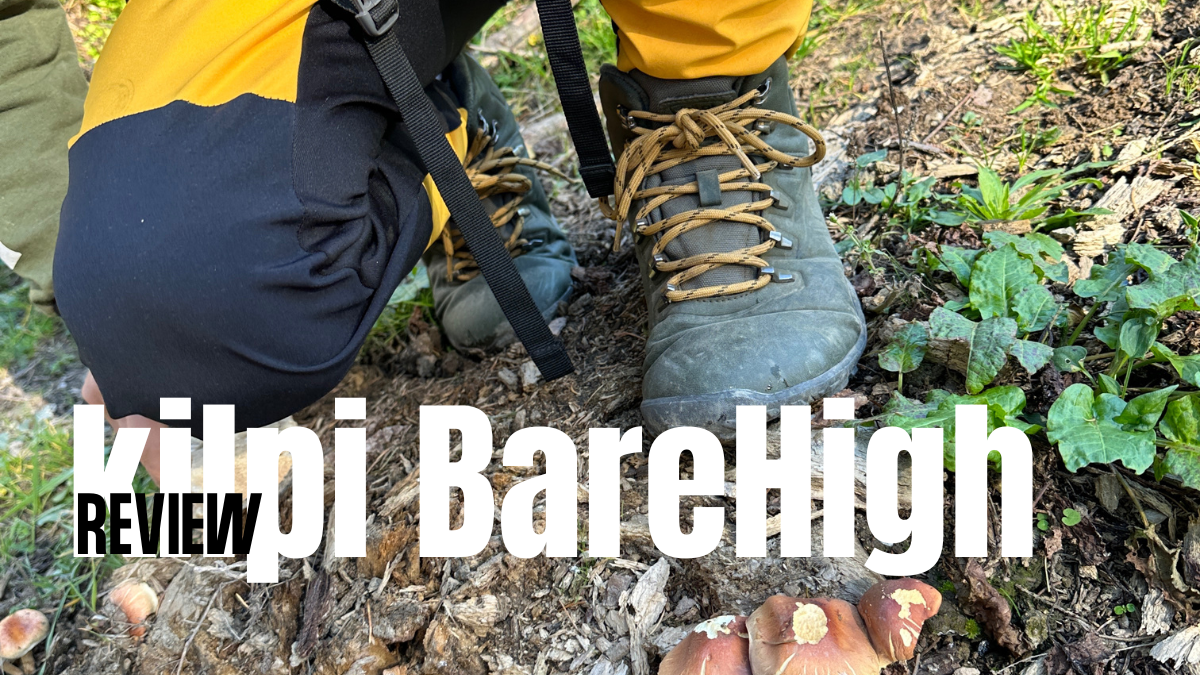
Kilpi BareHigh Review: Tested on an 11 km Mountain Hike
Finding waterproof barefoot hiking shoes that can handle wet grass, forest trails, mud and longer wear is not always easy. We tested the Kilpi BareHigh model on an 11 km autumn hike in the Slovak mountains to see how it performs in real outdoor conditions.
Looking for waterproof barefoot hiking shoes? Here is how Kilpi BareHigh performed.
Many barefoot shoes offer flexibility and natural movement, but more demanding terrain requires something extra: water resistance, reliable grip and enough protection for changing outdoor conditions.
That is why we decided to test Kilpi BareHigh in real conditions during an 11 km hike in the Slovak mountains.
The route included wet grass, forest trails, rocky sections and muddy terrain. The weather changed throughout the day and the temperature gradually became milder, which allowed us to test the shoes in different autumn conditions.
Test conditions
| Distance | 11 km |
| Terrain | forest trails, rocks, roots, mud |
| Weather | morning dew, drier afternoon |
| Tested season | autumn |
| Model | Kilpi BareHigh |
First test: wet grass and morning dew
Right at the beginning of the hike, we walked through tall wet grass covered with morning dew. This type of condition is often more challenging for water resistance than a short shower of rain.
Despite longer contact with moisture, our feet stayed dry during the test. The membrane performed reliably and the shoes remained comfortable even after several sections through wet vegetation.
For people who often walk in nature early in the morning or spend time on forest trails, this is a very practical feature.
Grip on different terrain
During the hike, we moved across several types of surfaces:
- forest trails,
- tree roots,
- rocky sections,
- muddy parts,
- damp slopes.
The outsole provided secure contact with the ground and the shoes felt stable even in more slippery places.
Of course, no hiking shoe can completely eliminate the risk of slipping, but during the test we did not feel insecure even on more technical sections.
Comfort during the whole hike
One of the most important qualities of barefoot footwear is comfort during longer wear.
Throughout the entire route, our feet remained comfortable without blisters or uncomfortable pressure points.
One advantage of the Kilpi BareHigh model is the space in the front part of the shoe, which allows the toes to move more naturally. At the same time, the lacing system makes it possible to adjust the shoe well even around a narrower ankle.
After several hours of walking, we did not notice any uncomfortable areas that would require adjustment or a break.
How does the sole feel?
If you are used to very soft barefoot shoes, the sole of the Kilpi BareHigh may feel slightly firmer at first.
After a few kilometres, however, it started to adapt more naturally to movement and felt noticeably more flexible.
This combination of protection and flexibility can be an advantage in hiking footwear. The foot remains protected from sharp stones and uneven terrain, while still keeping a more natural range of movement.
Temperature comfort throughout the day
The BareHigh model has light insulation.
During the cooler morning, it provided pleasant warmth without the feeling of cold feet. Later in the day, as the temperature became milder, the shoes still felt comfortable without unpleasant overheating.
This makes the model an interesting choice especially for:
- autumn,
- winter in milder conditions,
- early spring,
- everyday wear during colder months.
Who is Kilpi BareHigh suitable for?
Based on our test, we would recommend this model especially for:
- hikers looking for waterproof barefoot shoes,
- people who regularly walk in nature,
- autumn and spring hikes,
- dog walks in outdoor terrain,
- those who want a combination of protection and natural movement.
Thanks to the membrane and light insulation, this model is not only suitable for hiking. Many people will also appreciate it as everyday outdoor footwear during colder months.
Technical overview
| Sizes | 36–46 |
| Fit | suitable for regular to slightly wider feet |
| Ankle fit | well adjustable even around a narrower ankle |
| Membrane | yes |
| Insulation | light |
| Water resistance | yes |
| Materials | technical leather or natural leather, depending on the variant |
| Colour options | yes |
Good to know:
Kilpi BareHigh is available in both technical leather and natural leather versions, so you can choose the variant that best suits your preferences and the way you plan to use the shoes.
Our verdict
Kilpi BareHigh offers a very good combination of water resistance, comfort and confidence in outdoor terrain.
It is not the softest barefoot hiking shoe on the market, but this is exactly what makes it interesting. It provides a practical compromise between natural movement and the protection many people expect from hiking footwear.
After 11 kilometres in varied autumn conditions, the model left the impression of a reliable barefoot hiking shoe that can handle wet trails, forest terrain and all-day wear without major compromises.